

Getting medical equipment of any kind requires different steps that can be confusing or seem daunting.
You may be asking questions like: How do I start? Who and where do I get equipment or supplies from? Are any costs covered by insurance?
Whether you’re a patient or caregiver, here is a breakdown of how to get home medical equipment and supplies, from a Durable Medical Equipment supplier with 30+ years experience, accredited with all insurances and CMS – Center for Medicare and Medicaid Services.
First and foremost, you need to know some lingo.
*DME is for Durable Medical Equipment
*LMN is a Letter of Medical Necessity
People of all ages -from infants to seniors use medical devices to live, and once you or a loved one is in need, it’s important to take care of quickly.
Examples of durable medical equipment include:
- Mobility aids, Lift Chairs, Adjustable Beds and Patient lifts: Mechanized lifts that help caregivers move a patient in and out of a bed or chair.
- Bathroom safety equipment such as shower and bath chairs: Provide a safe place to sit during bathing.
- Monitoring and therapeutic devices Infusion pumps: Used for intravenous medication delivery.
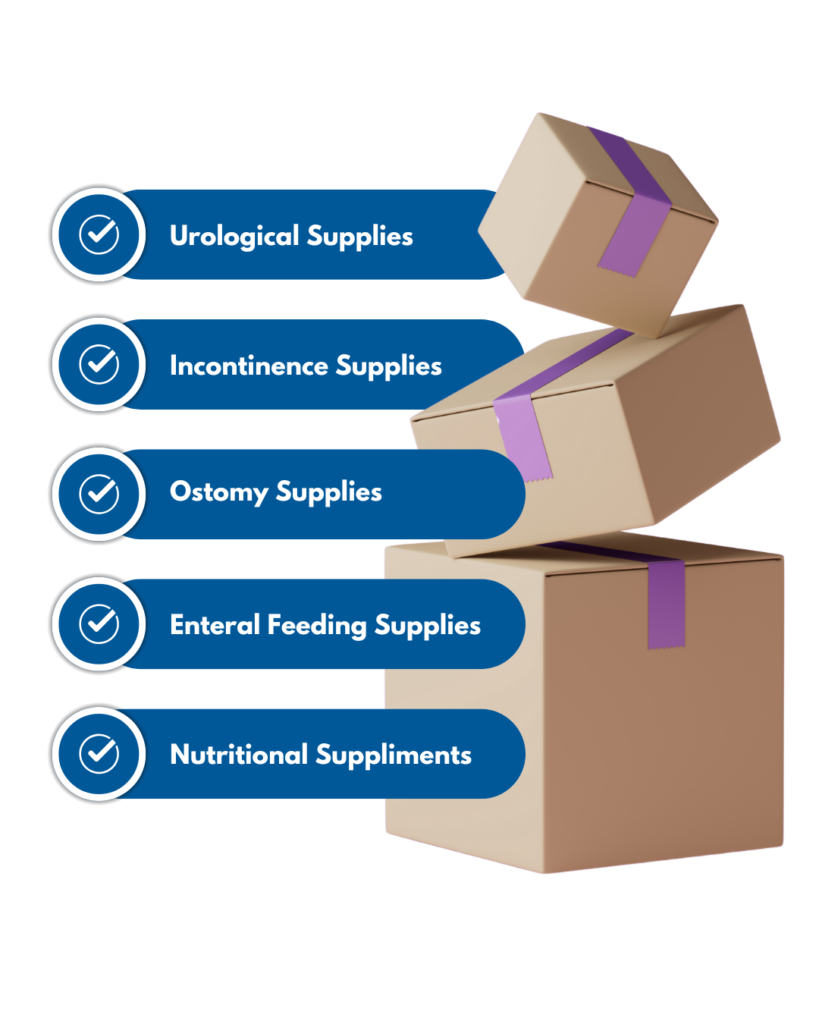
- Disposable or Consumable Medical Supplies such as Diapers and Catheters can be classified as DME because of its function in managing a long-term condition. Incontinence supplies like diapers are often treated as consumables, but can sometimes be covered under DME if they meet certain medical necessity and long-term use criteria.
- Consumable Nutritional Supplies like Shakes for Tube Feeding can also fall under the DME category if they are treating a long term medical condition.
Here’s where to start.
- Speak with Your Doctor
Start with speaking to your doctor or medical staff about your medical need.
Most physicians, from physical therapists to general practitioners and specialists, are happy to provide their patients with necessary medical equipment orders and documentation to send to insurance and DME suppliers. - A Letter of Medical Necessity or Prescription is typically required for Medical Equipment or Supplies to be covered by insurance
In order to get costs covered by insurance, your doctor will either send a prescription or letter of medical necessity (LMN) to a preferred medical supplier to process your order. - Find a DME provider in your area or online that offers the equipment needed.
Your doctor’s office should be able to offer a few names or take care of sending documentation straight to their preferred DME provider. - Not all equipment will be covered at 100%, and there could be costs associated with getting the equipment, even with insurance. Various factors such as the type of equipment, the patient’s medical condition, and their insurance coverage all take effect.
- If you prefer to purchase your medical equipment without insurance coverage, you can usually do so out-of-pocket through certain retailers and DME suppliers.
Call our friendly representatives in our New Patient Department and get started today at (866) 271-0827.
We’re open Monday – Friday 8am – 5pm EST. ¡Hablamos Español!

